
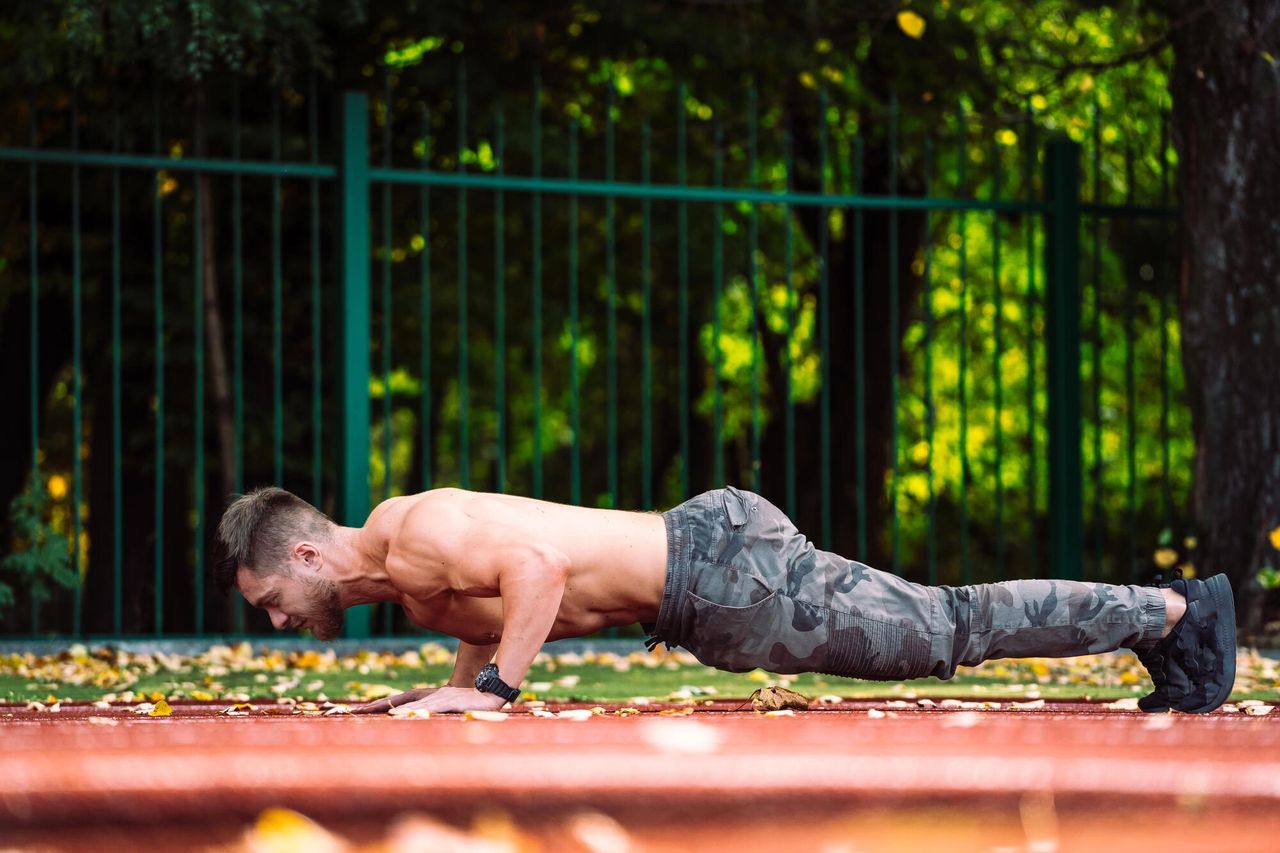
Think about it: transforming your body using nothing but your own weight and willpower. No expensive gym membership. No fancy equipment. Just you, gravity, and the limitless potential of human movement.
Welcome to the world of calisthenics – the ancient art of bodyweight training that’s making a modern comeback.
We can help. Check out this beginner calisthenics program today.
Benefits of Calisthenics for Beginners
Since calisthenics relies solely on body weight, there’s no need for expensive gym equipment or memberships, making it an ideal choice for those looking to exercise at home or in outdoor spaces.
As a calisthenics beginner, you can start with simple movements, and as you build strength, you can progress to more challenging beginner bodyweight exercises, such as decline push-ups or pistol squats. This allows for continuous progression without the need for extra equipment.
This form of exercise also emphasizes functional strength, which means it helps improve your ability to perform everyday movements with ease, from lifting objects to maintaining better posture.
Calisthenics promotes overall body awareness. Since it requires you to control and stabilize your body through different movements, you’ll develop a better understanding of your body’s strengths and weaknesses.
Assessing Your Fitness Level
Knowing where you stand helps prevent injury, promotes steady progress, and allows you to tailor your calisthenics routine to your specific needs. Assessing your fitness level involves evaluating your strength, endurance, flexibility, and cardiovascular health.
Begin with a simple strength test by trying out basic bodyweight exercises like:
- Push-ups
- Squats
- Planks
Note how many reps or how long you can hold each exercise with proper form. For example, if you can only do a few push-ups before losing form, that’s a good indicator to start with modified push-ups.
The same applies to squats – if you feel discomfort or struggle to complete a full set, you may need to focus on building lower body strength gradually.
You can gauge your endurance by performing a timed exercise, such as a plank hold or jumping jacks. Record how long you can maintain the activity before feeling fatigued. This will give you a baseline to improve from over time.
Measure your flexibility by testing your range of motion in different stretches. For instance, how far can you reach during a hamstring stretch? Limited flexibility in certain areas may indicate the need for more targeted stretching routines.
If you don’t have enough room in your home, you can always sign up for a 24-hour gym in your area.
Putting Together a Calisthenics Workout Plan
It can take some effort to come up with the perfect routine for you. It’s important to focus on full-body movements that target multiple muscle groups, allowing you to develop balanced strength.
Incorporating these exercises will help work your upper body, lower body, and core. For beginners, aim for three days a week of bodyweight exercises with rest days in between to give your muscles time to recover.
Think in terms of sets and repetitions. A good starting point when you’re starting a calisthenics routine is to perform two sets of eight repetitions for each calisthenics exercise, adjusting the reps based on your fitness level.
As your strength improves, gradually increase the number of sets or reps, or try more challenging variations of each movement.
Stretching and Cooling Down
After pushing your muscles through challenging movements, it’s essential to allow them time to recover and relax. A proper cool-down routine helps reduce muscle soreness, and also enhances flexibility, and prevents injury. It’s a simple yet effective way to transition your body from an intense workout to a state of rest.
Start with dynamic stretches immediately following your workout. Movements like leg swings, arm circles, and gentle torso twists will help maintain blood flow while allowing your body to gradually return to its normal resting state.
This is followed by static stretches, where you hold a stretch for 20-30 seconds. Focus on the muscles you’ve worked during your session, such as your:
- Quads
- Hamstrings
- Chest
- Shoulders
Incorporating deep breathing during your cool-down helps relax the body and mind. As you stretch, focus on slow, deep breaths, which can help release tension and improve the effectiveness of the stretch. This not only enhances muscle recovery but also calms your heart rate and prepares you for a smoother post-workout recovery.
Common Mistakes to Avoid
Like any exercise routine, it’s easy to make mistakes that can hinder your fitness progress or even cause injury.
Enthusiasm is great, but overworking your muscles without allowing them time to recover can lead to burnout or overuse injuries. Instead of training every day, allow for rest or active recovery days to give your body time to repair and grow stronger. Start with a few workouts each week and slowly increase the frequency as your fitness level improves.
Ignoring progression can also slow down your journey. Once you’ve mastered basic exercises, don’t be afraid to challenge yourself with more advanced variations. This keeps your muscles engaged and prevents plateaus.
Inconsistent routines are a major obstacle to progress. Results from calisthenics come from consistent effort over time. Skipping workouts or frequently changing routines can hinder your ability to build strength and see improvements. Stick to a regular schedule and track your progress to ensure steady gains.
Getting Professional Help
Whether you’re new to fitness or looking to refine your form, the guidance of a personal trainer can help you achieve your fitness goals more effectively.
One of the key benefits of working with a professional is personalized guidance. A trainer can assess your fitness level, pinpoint your strengths and weaknesses, and come up with a tailored calisthenics program that suits your specific needs.
They can also ensure that you’re performing exercises with proper form and technique, which is crucial for avoiding injuries, especially as you begin to introduce more advanced movements into your routine.
Beginner Calisthenics Program: Now You Know
By using this beginner calisthenics program, you’ll be in top shape in no time at all.
Are you ready to get fit? Power in Motion is a family, working together to help every member FEEL their best.
Sign up for a membership today.


